
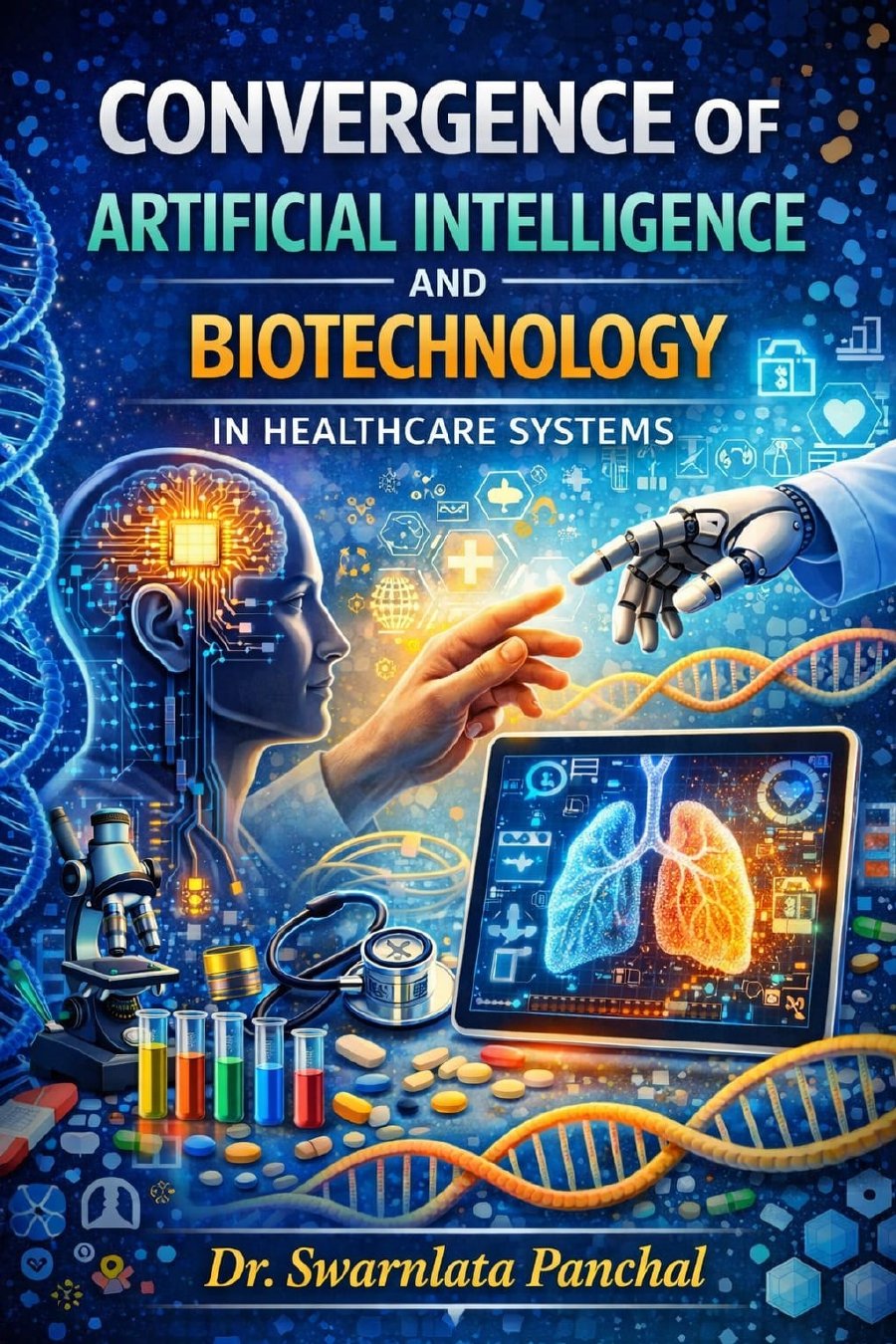

Convergence of Artificial Intelligence and Biotechnology in Healthcare Systems
Original price was: $850.00.$800.00Current price is: $800.00.
Dr Swarnlata Panchal
Description
1.1 OVERVIEW OF ARTIFICIAL INTELLIGENCE IN HEALTHCARE
AI in Healthcare
The advancement of artificial intelligence in the healthcare sector has been transformative, fundamentally altering the processes involved in patient diagnosis, treatment, and monitoring. The influence of AI is apparent throughout the entire medical landscape, encompassing areas such as research, clinical documentation, treatment strategies, and patient interaction. By facilitating more precise diagnoses and allowing for highly individualized treatment approaches, AI is enhancing patient outcomes while also optimizing workflows for healthcare providers. A key advantage of AI in this field is its capacity to swiftly analyze extensive clinical data sets, aiding professionals in recognizing disease indicators, assessing patient risks, and identifying health trends within populations that may otherwise go unnoticed.
The range of applications for artificial intelligence in healthcare is extensive and impactful. AI technologies are currently employed to examine radiological images for the early detection of cancers and cardiovascular diseases, forecast outcomes by utilizing electronic health records, and refine the design of clinical trials. Integrating AI into hospital infrastructures, outpatient facilities, and even home monitoring systems enables medical professionals to deliver more intelligent, rapid, and efficient care. Consequently, AI is increasingly viewed as pivotal to the future of medicine by providing higher quality care while reducing expenses and improving operational efficiency
The narrative surrounding artificial intelligence in healthcare gained significant attention with IBM’s Watson a pioneering high-profile AI system. In 2011, IBM introduced a specialized version of Watson tailored for healthcare that used natural language processing to interpret and analyze medical data. This initiative represented one of the initial instances where AI was utilized in real-world settings to enhance decision-making processes within healthcare. Presently, major technology companies like Apple, Microsoft, and Amazon have joined IBM in heavily investing in AI-driven healthcare technologies aimed at revolutionizing the industry.
The prospects for AI within healthcare are exceptionally promising. Experts anticipate that it will further reshape our approach to processing clinical information, diagnosing intricate conditions, innovating treatments, and even preventing illnesses before they manifest. Through leveraging AI capabilities in healthcare settings, physicians and care teams can make more informed decisions based on precise real-time insights—thereby saving time, lowering costs, and improving management of patient records. Whether through discovering new cancer treatments or enhancing chronic disease monitoring and overall patient experience AI embodies a transformative force within this domain.
Looking forward, artificial intelligence holds the potential to initiate a new era characterized by precision medicine where patients receive customized treatments more quickly and accurately than ever before. By integrating artificial intelligence into healthcare practices, the sector can strive toward achieving both enhanced patient outcomes as well as more efficient sustainable care delivery for providers. Ultimately, the future landscape of medicine will be shaped by how adeptly we leverage the capabilities of artificial intelligence within healthcare—a future where technological innovation synergizes with human expertise to offer unprecedented levels of medical care.
Let’s explore several varieties of artificial intelligence and the advantages they offer to the healthcare sector through their application.
Related products
-
- Sale!
- Books
Advanced Manufacturing Technology
- Original price was: $650.00.$630.00Current price is: $630.00.
- Add to cart
-
- Sale!
- Books
Innovations in Electrical Systems and Automation
- Original price was: $650.00.$630.00Current price is: $630.00.
- Add to cart



Reviews
There are no reviews yet.