

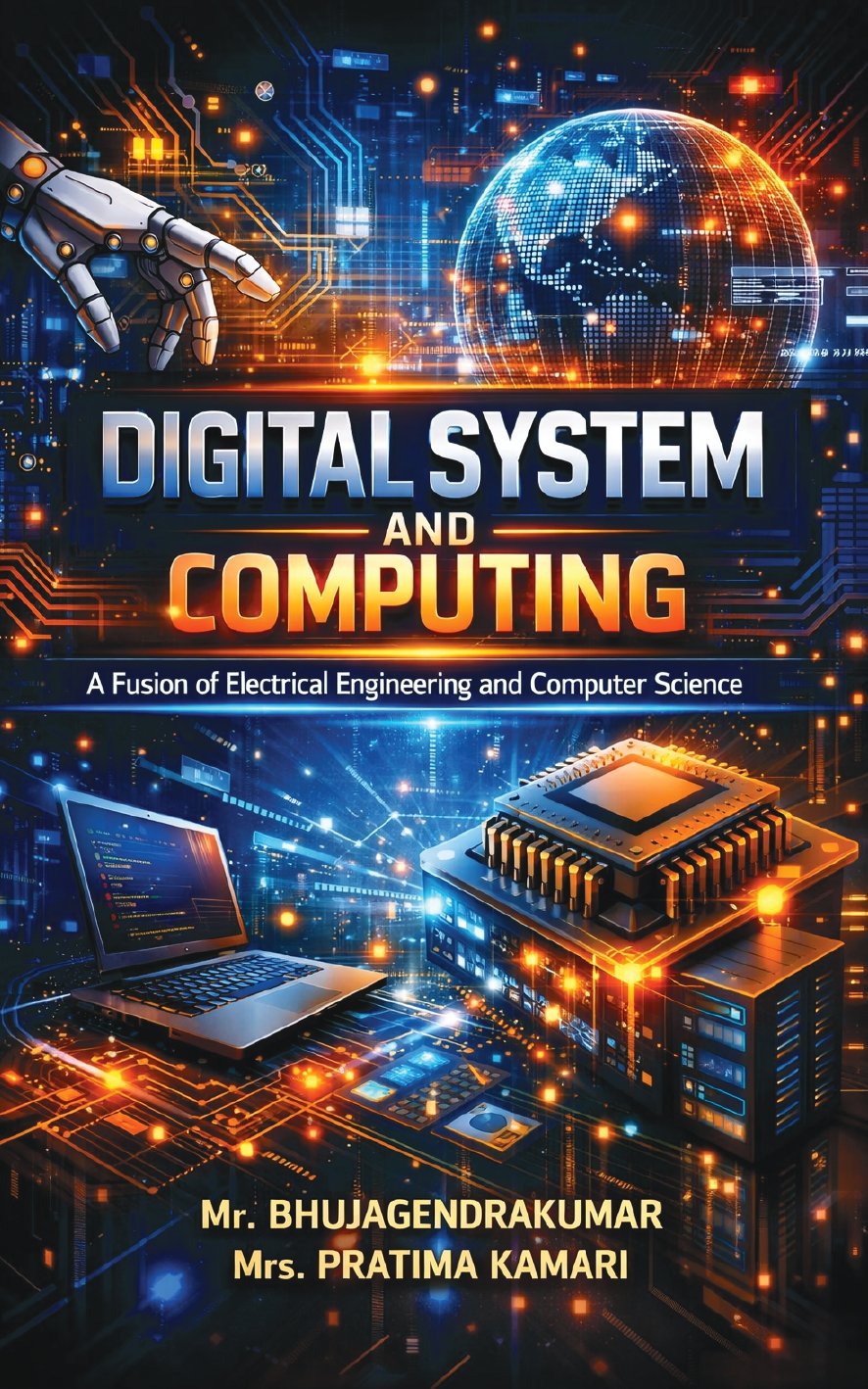
Digital system and computing: A fusion of electrical engineering and computer science
Original price was: $650.00.$630.00Current price is: $630.00.
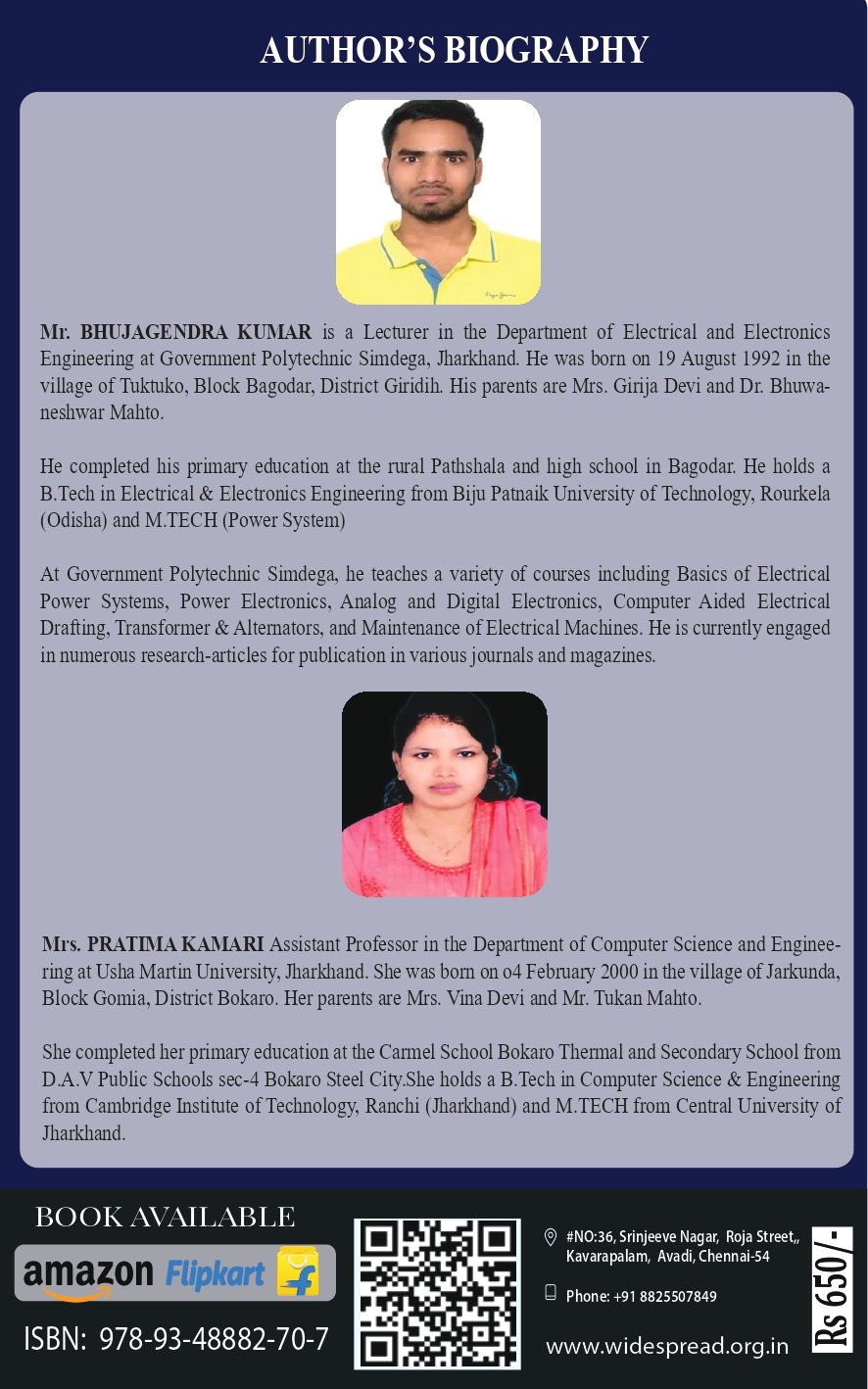
Mr Bhujagendra Kumar , Mrs.Pratima Kamari
Description
EVOLUTION OF DIGITAL TECHNOLOGY
What is Digital Technology?
Digital technology encompasses the use of electronic systems for the creation, storage, processing, and communication of information, primarily in a digital (binary) format via devices such as computers. This field includes aspects like software, hardware, internet technologies, and digital platforms.
Bits and bytes
In contrast to analog technology that relies on continuous waves, digital technologies operate using bits and bytes. Bits signify data through binary numbers, enabling enhanced precision and efficiency. A bit, short for “binary digit,” serves as the fundamental unit of information in computing and digital technology. It can represent one of two values: 0 or 1.
These values correspond to the on or off states of an electronic device. Bits are essential for both data transmission and storage since any form of digital information can be depicted by a sequence of bits. Conversely, a byte is an information unit composed of 8 bits.
Given that each bit has two possible states (0 or 1), a byte can represent up to 2^8 or 256 distinct values. This capability allows bytes to encode various types of information, ranging from text characters to colors in images. The connection between bytes and bits is straightforward: one byte consists of 8 bits.
This connection is essential in the realm of digital technology, as numerous systems and standards rely on the organization of bits into bytes for the efficient processing and storage of data.
When Was Digital Technology Invented?
The idea of digitization began to emerge in the 1930s. However, it was not until the creation of the transistor in 1947 that digital technology truly began to develop. Transistors enabled the downsizing of electronic components, allowing for the construction of smaller, more powerful computers.
The Ascendance of Digital Computers
Throughout the 1950s and 1960s, digital computers started to become widely recognized. Firms such as IBM and Apple initiated the development of machines capable of executing complex calculations within seconds. This advancement heralded the onset of the digital age, revolutionizing various industries and altering lifestyles .
The Internet Era and Global Digitalization
The emergence of the Internet in the 1990s elevated digital technology to unprecedented heights .The capability to interconnect devices via global networks enhanced communication and information sharing at remarkable speeds. This era also witnessed the inception of innovative forms of digital entertainment, including video games and streaming services.
The Significant Influence of Digital Technology on Society
Digital technology has had a substantial influence on society. It has enhanced production efficiency, broadened access to information, and transformed communication methods. Moreover, it has created new opportunities across diverse sectors such as education, healthcare, and business.
Related products
-
- Sale!
- Books
PharmaDynamics: A Simplified Guide to Pharmacokinetics and Pharmacodynamics
- Original price was: $550.00.$500.00Current price is: $500.00.
- Add to cart
-
- Sale!
- Books
Biography of Professor Ramdeo Mishra, The Father of Indian Ecology
- Original price was: $650.00.$600.00Current price is: $600.00.
- Add to cart
-
- Sale!
- Books
ROAD MAP TO PYTHON
- Original price was: $650.00.$630.00Current price is: $630.00.
- Add to cart






Reviews
There are no reviews yet.