



ENTERPRISE LEADERSHIP GUIDE
Original price was: $850.00.$830.00Current price is: $830.00.
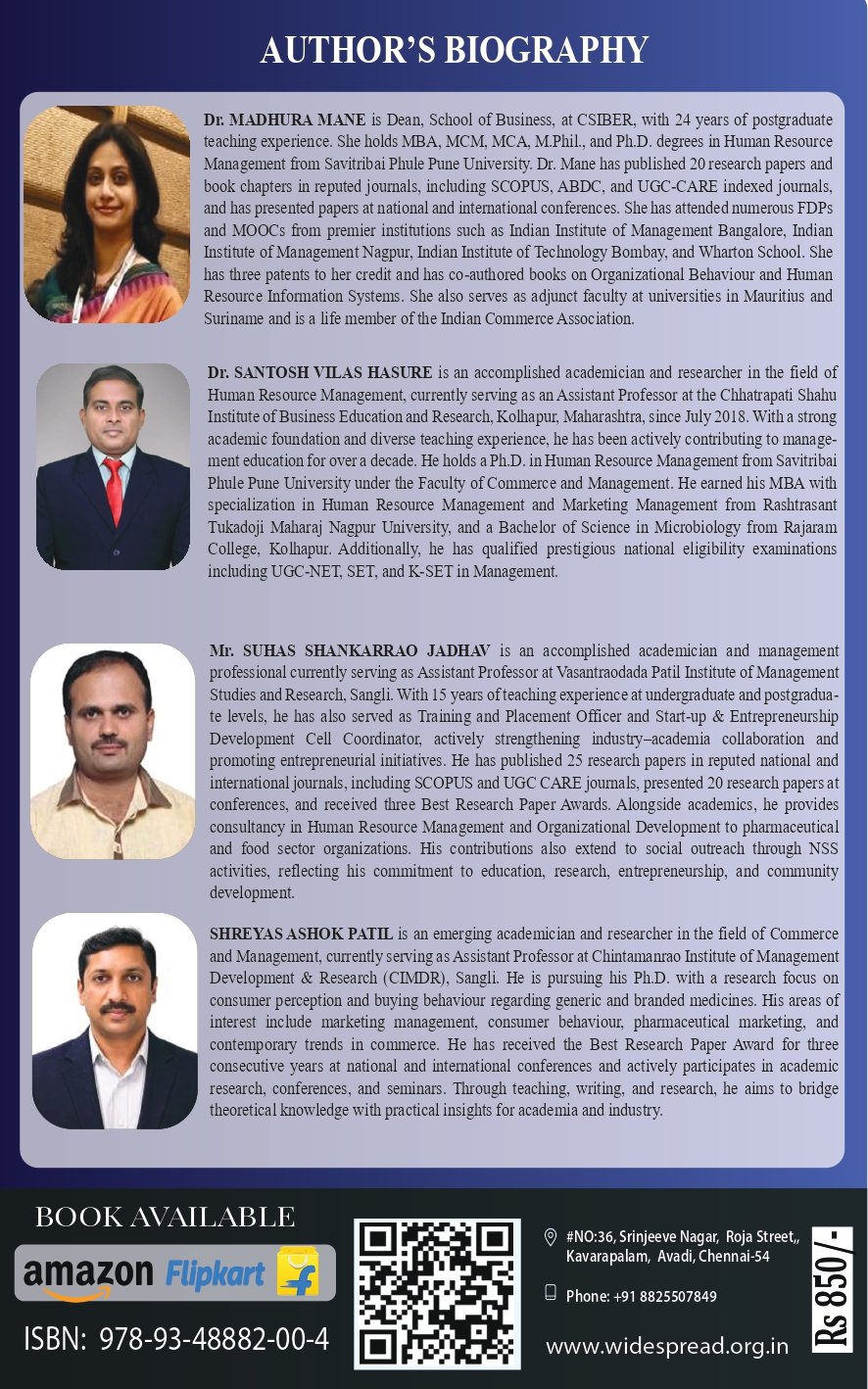
Dr Madhura Mane , Dr Santosh Hasure , Mr Suhas’s Shankarrao Jadhav , Mr Shreyas Ashok Patil
Description
1.1 LEADERSHIP IN MODERN ENTERPRISES
An impressive statistic showcasing the significant influence of leadership on organizational performance is that, according to a recent report from a well-known consulting firm, managers account for at least 70% of the differences in global employee engagement scores. In contrast, ineffective leadership frequently results in disengagement among employees, increased turnover rates, and ultimately leads to financial underachievement. This illustrates not only the consequences of poor management but also underscores the necessity for organizations to cultivate their leaders.
Leadership development should not be viewed merely as a set of sporadic training sessions. Instead, it is a strategic and continuous endeavor aimed at enhancing an individual‘s leadership abilities and competencies to prepare them for present and future challenges. In today‘s business landscape characterized by Volatility, Uncertainty, Complexity, and Ambiguity (VUCA) where disruption is commonplace, prioritizing leadership development has never been more critical. Effective leadership serves as the essential catalyst that converts uncertainty into opportunity and chaos into clarity.
This guide will explore the key reasons for nurturing strong leaders, delineate the essential skills required for effective leadership, and provide guidance on selecting suitable leadership programs to establish a robust pipeline of future leaders. By recognizing the significance of leadership development, organizations can achieve a sustainable competitive advantage while addressing contemporary challenges.
The Core Rationale: Why Leadership Development Matters
The significance of developing leadership extends well beyond being a mere human resources initiative; it constitutes a strategic necessity that directly affects an organization‘s financial performance and long-term sustainability. The deliberate enhancement of leadership capabilities is fundamental for achieving sustained success across all sectors.
Driving Organizational Performance and Growth: There exists a direct correlation between effective leadership and financial success. Research indicates that successful financial outcomes are linked with robust leadership teams. Leaders who can motivate their teams, utilize resources wisely, and convey their vision effectively significantly enhance their chances of success. This involves making informed decisions based on data that promote efficiency, stimulate innovation, and ultimately secure improved market positioning along with sustained financial growth. The impact of developing strong leaders manifests in increased market share and better return on investment (ROI).
Fostering a Culture of Engagement and Retention: A crucial aspect of the influence exerted by leadership development is its effect on workplace culture. The adage ―bad managers create bad companies‖ holds true in many respects. Leaders demonstrating empathy, active listening skills, and clear communication foster trust within their teams while cultivating a positive work environment that significantly enhances employee morale. This creates a dedicated workforce engaged with the organization‘s mission while reducing costly turnover rates. Employees are more likely to be productive, innovative, and committed to achieving long-term objectives when they feel understood and valued by their leaders.
Ensuring a Strong Leadership Pipeline: Every thriving organization requires a well- defined succession plan. Leadership development ensures there are always qualified candidates prepared to assume critical roles when necessary. This process entails identifying high-potential individuals and equipping them with relevant skills along with experiences needed for greater responsibilities. A lack of an established pipeline can result in considerable disruptions during transitions within senior management ranks. By proactively fostering talent internally, organizations preserve continuity, safeguard institutional knowledge, and minimize risks associated with recruiting external candidates for key positions.
Navigating Change and Uncertainty: The contemporary VUCA environment necessitates adaptable and resilient leaders capable of guiding teams through substantial changes such as digital transformations or AI integration alongside global events or increasing prevalence of hybrid work models. Their ability to communicate effectively while managing uncertainty allows organizations to swiftly adapt to emerging challenges efficiently. Such leaders act as stabilizing forces during periods marked by ambiguity; they provide direction amid confusion ensuring organizational competitiveness in an ever-evolving landscape.
The Evolving Concept of Leadership Traditional vs. Modern Leadership
Historically, leadership was often characterized by a focus on hierarchical structures and authority, with decision-making primarily residing at the upper levels. However, this model is becoming increasingly irrelevant in today‘s collaborative and dynamic environment. Contemporary leadership prioritizes inclusivity, flexibility, and emotional intelligence.
Essential Skills for Today’s Leaders
As the landscape of leadership transforms, a wider array of skills is now essential for effectively managing complexities and fostering success. Key competencies for modern leaders include:
Emotional Intelligence: The ability to recognize and manage one‘s own emotions as well as those of others to cultivate strong interpersonal relationships.
Adaptability: A willingness to embrace change and adjust strategies in response to evolving situations.
Strategic Thinking: The capacity to foresee trends, establish clear objectives, and align team actions with broader organizational goals.
Communication: The skill of articulating ideas clearly while also engaging in active listening and promoting open dialogue.
Technology Proficiency: An understanding of digital tools and the ability to utilize data for informed decision-making.
By honing these skills, leaders can effectively navigate the intricate challenges of contemporary business environments and motivate their teams toward achieving outstanding results.
The significance of leadership development is crucial in the ever-evolving business landscape. It serves as a fundamental element that ensures an organization‘s stability and success over time by enhancing performance, cultivating a positive culture, and ensuring efficient operations. By placing emphasis on the ongoing advancement of leadership skills, particularly emotional intelligence and strategic thinking, organizations can establish a strong talent pipeline and appreciate the profound effects of effective leadership development. This is not merely a beneficial practice; organizations must recognize investment in leadership training programs as an essential commitment to their most valuable resource: their future leaders.
In the contemporary business context, effective leadership transcends mere result attainment; it encompasses the establishment of a culture characterized by trust, innovation, and adaptability. By prioritizing emotional intelligence, promoting teamwork, and staying abreast of industry trends and regulations such as ASC 842, leaders are better equipped to overcome challenges and achieve success.
Modern leaders motivate their teams, welcome change, and strategically position their organizations for a prosperous future. In doing so, they not only address current market demands but also contribute to shaping the next generation of leaders.
Related products
-
- Sale!
- Books
DATA SCIENCE AND NEURAL NETWORK
- Original price was: $650.00.$600.00Current price is: $600.00.
- Add to cart
-
- Sale!
- Books
ARTIFICIAL INTELLIGENCE : A MODERN APPROACH
- Original price was: $650.00.$600.00Current price is: $600.00.
- Add to cart
-
- Sale!
- Books
Biography of Professor Ramdeo Mishra, The Father of Indian Ecology
- Original price was: $650.00.$600.00Current price is: $600.00.
- Add to cart





Reviews
There are no reviews yet.