

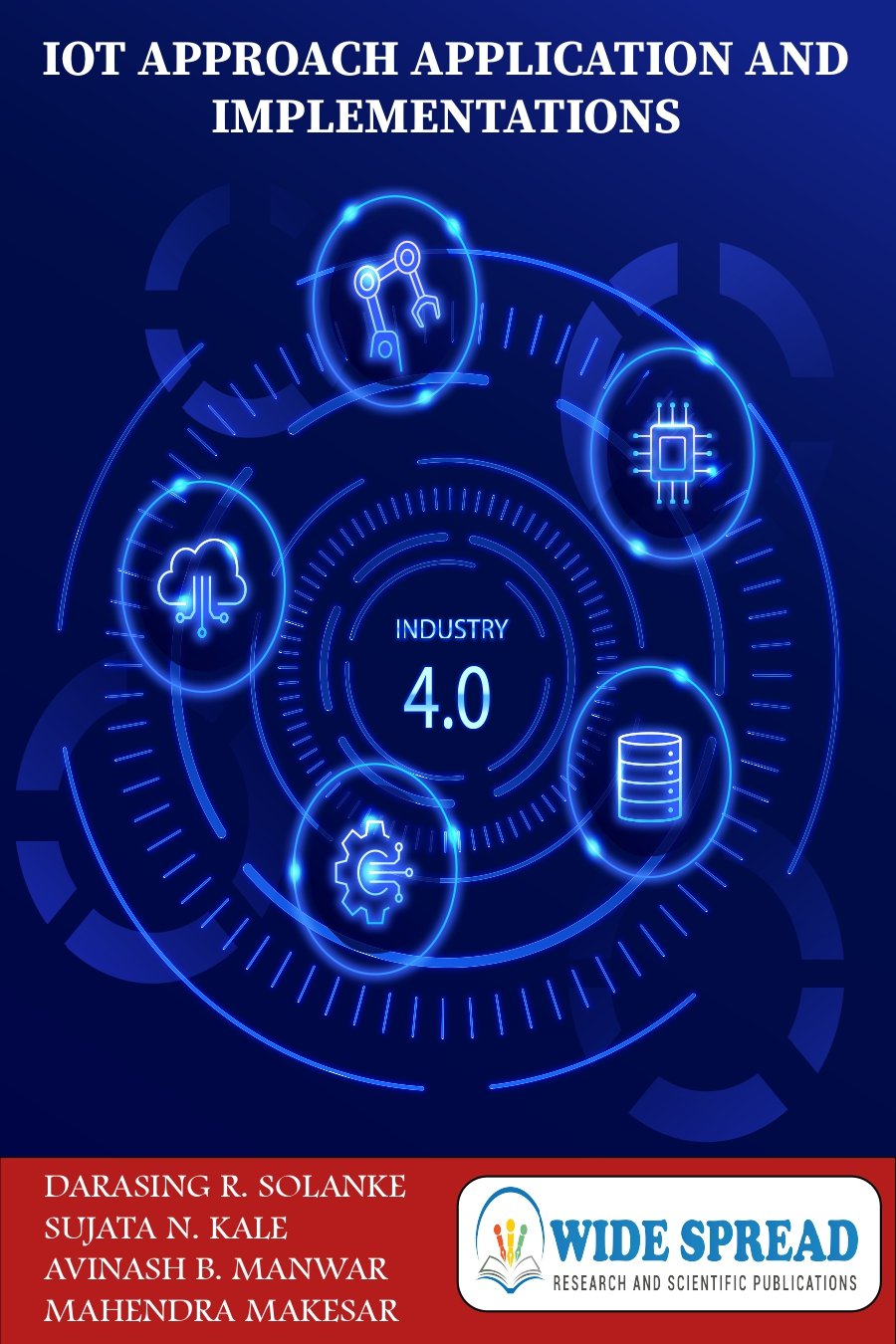
IoT Approach Application and Implementations
Darasing R. Solanke , Sujata N. Kale , Avinash B. Manwar , Mahendra Makesar
Description
INTERNET of THINGS
What is Internet of Things (IoT)?
The internet of things, or IoT, is a network of interconnected devices that communicate and exchange data with one another and the cloud. IoT devices are often embedded with technology such as sensors and software, and they can include mechanical and digital machines as well as consumer products.
These gadgets range from basic household goods to large industrial machines. Organizations in a number of industries are increasingly leveraging IoT to improve efficiency, provide better customer service, make better decisions, and generate corporate value.
The Internet of Things allows data to be transferred over a network without the need for human-to-human or human-to-computer exchanges.
A thing in the internet of things can be a person with a heart monitor implant, a farm animal with a biochip transponder, an automobile with built-in sensors that alert the driver when tire pressure is low, or any other natural or man-made object that can be assigned an Internet Protocol address and transfer data over a network.
Why is the IoT Important?
The Internet of Things is essential because it can deliver useful data and analytics to both individuals and businesses. It also improves usability by allowing several devices to be easily controlled via a smart phone or voice commands.
The primary benefits of this network of things can be divided into three categories: interconnection, communication, and automation.
Interconnectivity
This is the fundamental pillar of the Internet of Things. It enables comprehensive integration of smart devices and lets users to operate them with a single touchpoint.
For example, with an IoT-enabled thermostat, you can monitor its status from your phone without physically being in the room. Interconnectivity also enables your fitness trackers, smart appliances, and voice assistants to communicate and share data smoothly with one another.
Communication
Communication and interconnection are inextricably linked with the Internet of Things. Interconnectivity is about data exchange, but communication goes a step further by allowing devices to communicate and control one another.
Consider our last smart gadget example. With these devices, you can use voice control to perform a wide range of tasks, like adding items to your online lists and shopping carts, setting reminders on your phone or calendars, turning on lights, and much more, all with one or two easy instructions.
At the commercial level, inter-device communication enables organizations to keep ahead of potential issues. Communication between devices can alert users if a piece of equipment requires maintenance before it fails, allowing the organization to service the equipment before it disrupts workflow. These devices can frequently identify the specific section of the equipment that is causing problems, reducing the amount of time a technician has spent on-site locating and repairing the problem.
Automation
Because gadgets are interconnected and can communicate with one another, they may often be programmed to execute specific duties automatically.
Returning to our smart house analogy, automation can assist you with your morning routine. With the right smart technology in your house, you can program your coffee maker to brew and your alarm clock to sound at the same time every morning, allowing you to keep your schedule constant.
At the commercial level, automation gains even greater power. Some farmers have discovered ways to use the Internet of Things to increase the efficiency of their greenhouses. Smart greenhouses can help regulate the climate, lighting, air flow, and water usage, allowing plants to grow with less human intervention.
Related products
-
- Sale!
- Books
CORPORATE ACCOUNTING: CONCEPTS AND APPLICATIONS
- Original price was: $650.00.$630.00Current price is: $630.00.
- Add to cart
-
- Sale!
- Books
APPLIED BIOPHARMACEUTICS AND PHARMACOKINETICS
- Original price was: $650.00.$600.00Current price is: $600.00.
- Add to cart
-
- Sale!
- Books
MARKETING INTELLIGENCE: TOOLS FOR THE NEW AGE MARKETER
- Original price was: $650.00.$630.00Current price is: $630.00.
- Add to cart




Reviews
There are no reviews yet.